Space Medicine
Medicine that worksbeyond Earth.
We study how space radiation breaks down medicines, and design formulations that stay safe and effective for the length of a mission.
Our approach
Chemistry that protects medicines in space.
Radiation-protective additives
Molecules that shield active ingredients from radiation damage.
More stable formulations
Including freeze-dried versions that keep medicines effective for longer.
Tested on the ground and in orbit
Radiation testing on Earth, then real exposure on the ISS in flight hardware we engineer ourselves.
Flagship mission
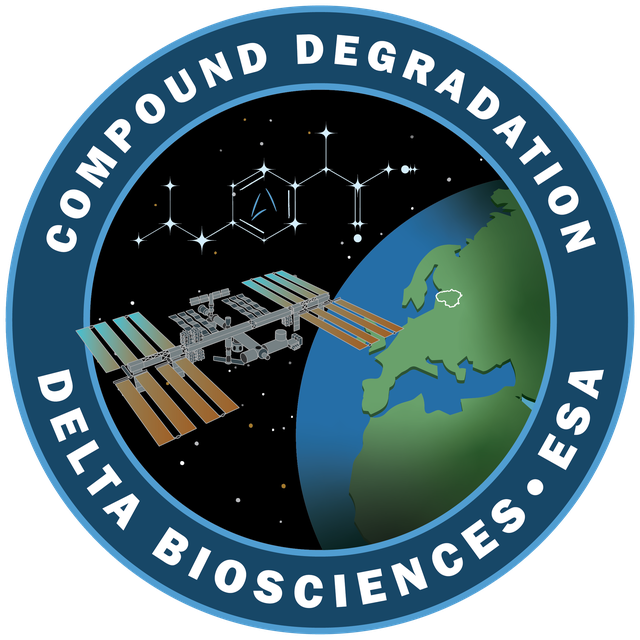
Compound Degradation
With the European Space Agency, we're sending 134 medicines and molecules to the International Space Station to measure how space radiation breaks them down.
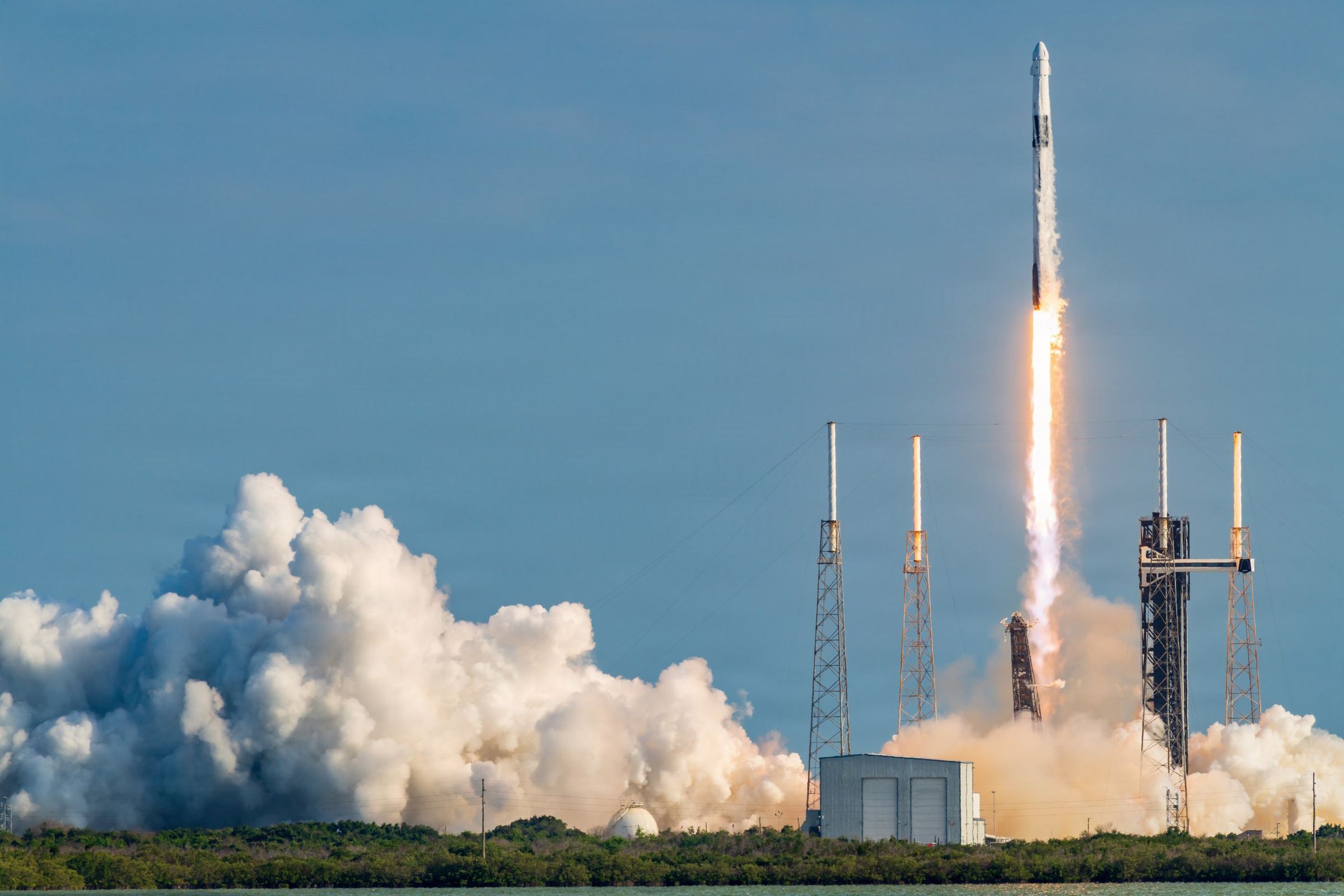
Scheduled to launch · Sunday 29 November · 17:47 Vilnius · 15:47 UTC · 10:47 US Eastern
T–
--Days
--Hrs
--Min
--Sec
Photo: U.S. Space Force / Gwendolyn Kurzen
The journey
Lab bench to launch pad, and back.
Up to 32 months in orbit, with ground irradiation studies, including heavy-ion tests at GSI Helmholtz Centre in Darmstadt, running alongside.
- 29 Nov 2026LaunchFalcon 9 lifts off from Cape Canaveral
- 1 Dec 2026Arrives at the ISSCygnus XL captured by Canadarm2
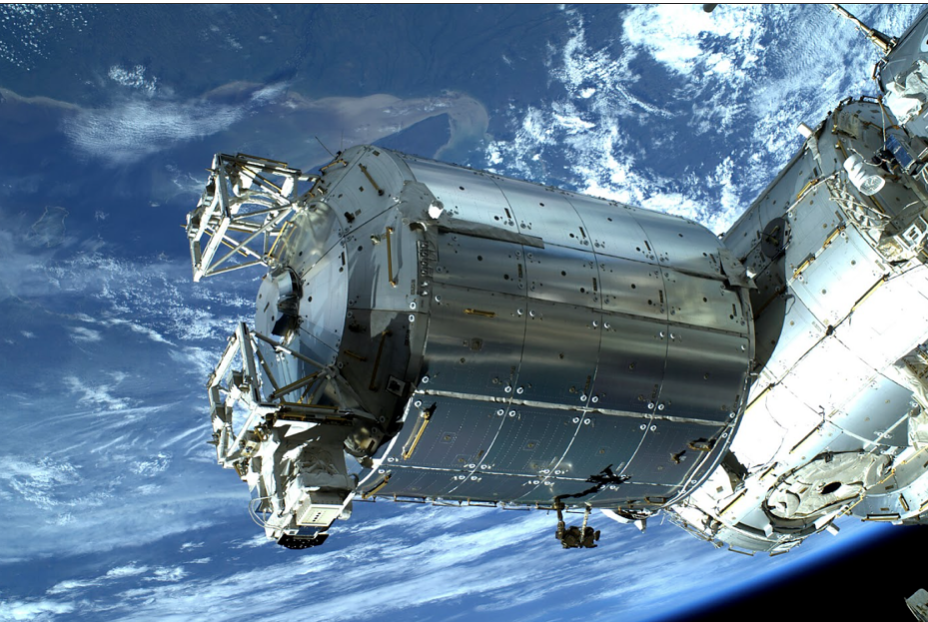
- Shortly afterInto ColumbusThe crew installs both kits in ESA's lab
- 2nd half of 2027First samples homeAnalysed in Delta's Vilnius lab
- Up to 32 monthsFinal returnThree returns to Earth in total
Mission details
- Payload
- 134 medicines and molecules · two kits
- Spacecraft
- Cygnus XL on Falcon 9 · NASA's NG CRS-25
- Destination
- ESA's Columbus module, ISS
- Data
- 1,600+ data points
- Built by
- Delta Biosciences · chemistry and payload engineering
- Partners
- ESA · DLR · GSI Helmholtz Centre
- NASA record
- Space Station Research Explorer
The mission
Why we're sendingmedicines to space.
Compound Degradation tests what space radiation does to medicines, and whether we can protect them.
01 · The problem
02 · The twist
Potency isn't safety. Ibuprofen flown on the ISS formed potentially toxic breakdown products that a standard potency test would miss3.
03 · The mission
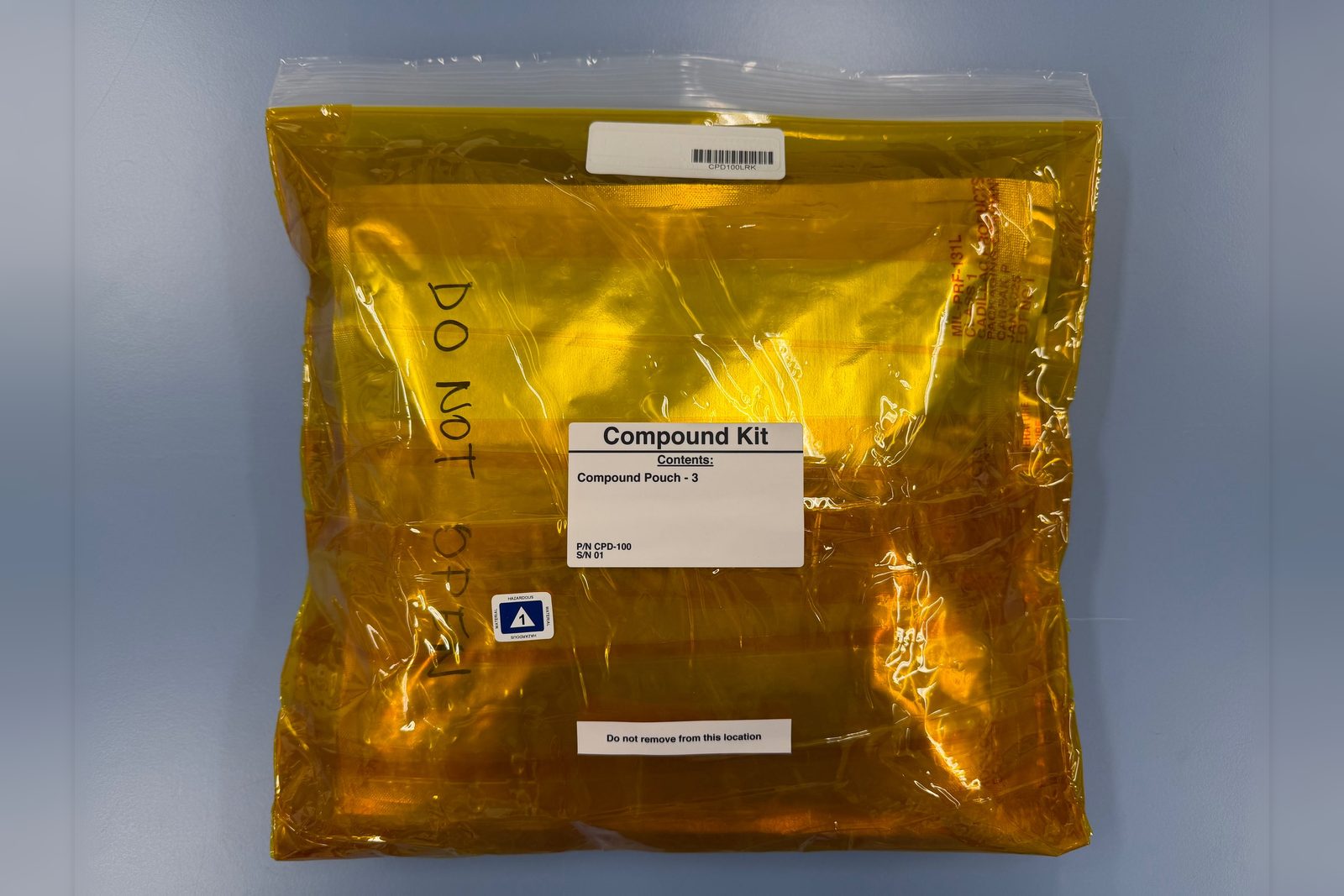
134 medicines and molecules, nearly four times as many as any earlier medicine study on the station, fly for up to 32 months in ESA's Columbus module, in flight kits Delta engineered and built in-house. Alongside them fly new liquid and freeze-dried versions Delta's chemists designed to withstand radiation. Three batches return, the first in the second half of 2027.
04 · Why it matters
Medicines crews can trust on the Moon and Mars, and fridge-free medicines for remote clinics and disaster zones on Earth.
Sources: 1 Diaz et al., npj Microgravity, 2024 · 2 Reichard et al., npj Microgravity, 2023 · 3 Tran et al., Advanced Healthcare Materials, 2024
What's flying
Types of medicine
Emergency medicinesPainkillersAntimicrobialsRadioprotectorsNutraceuticals
Flown as
LiquidsPowdersFreeze-dried
Plus Delta's own reformulations: new liquid and freeze-dried versions, and protective additives that shield the active ingredient. For some medicines, such as adrenaline and a common painkiller, several versions fly side by side.
How it works
Every medicine flies in six sample sets, matched by samples kept on the ground. Only the radiation changes, so any difference comes from radiation alone.
In orbit
ISS Columbus
Two spots with different radiation doses, for up to 32 months. Each kit logs dose, temperature and humidity.
On the ground
Vilnius
Matched control samples, no space radiation, same packaging and handling.
In a beam
GSI, Darmstadt
Additional heavy-ion tests on the ground.
Then analysed
Delta lab, Vilnius
Three returns. Each time: how much active ingredient remains, which breakdown products form, and whether they're safe.
Who's behind it
Led by
Delta Biosciences, Vilnius: both the chemistry and the engineering. We led the science, designed the reformulations, and engineered and built the flight payload.
Together with
Four ESA teams in the Netherlands, Germany, Switzerland and Italy, including the BIOTESC and ALTEC user support centres.
Supported by
DLR Institute of Aerospace Medicine (dosimetry) · GSI Helmholtz Centre for Heavy Ion Research (ground irradiation)
Science partners
Vilnius University · Center for Physical Sciences and Technology (FTMC)
Collaborators
Components and expertise from partners in Japan, the United States and elsewhere.
From idea to flight in under two years. The flight hardware is reusable, so it can carry experiments for other teams too.
Fly your experiment with us What's next
By the end of the mission, we'll know which medicines stay stable in space, what they break down into, and whether reformulation can protect them. Then we put that to work:
Medical kits
Moon and Mars
Stability and safety data on 134 medicines and molecules, to build a medical kit crews can rely on beyond low Earth orbit.
Return on Earth
Beyond the cold chain
Longer-lasting, fridge-free medicines, such as adrenaline, for people far from supply hubs: remote clinics, disaster zones and emergencies. We develop these versions for Earth in parallel.
Predicting shelf life
Machine learning
One controlled dataset to train our machine-learning models to predict how other medicines and molecules break down, including ones that have never flown.
Next, follow-up studies in cell cultures and animal models will assess whether the breakdown products are toxic.
Programmes and partners
Working with leaders in space and science.
ESA
Partner on the Compound Degradation mission.

NASA Space-H
First EU company invited to NASA's space health accelerator.

UK Space Agency
Cooperation agreement and the Astro-SANITAS project with LinkGevity.

GSI Helmholtz Centre
Ground-based radiation research.

Starlab
Among the first EU companies to collaborate on the commercial space station.
Featured
The mission in the news.
7 Oct 2026 · LRT English